 Wild Workation
A week on a sailing workation
From booking to departure — everything you need to know about how a Wild Workation week works.
Book your spot
Browse upcoming departures and choose a route that fits your schedule. We keep groups at a maximum of eight — so before confirming, we send a short application to understand your work setup and goals. Once approved, you receive a detailed welcome brief: what to pack, how to reach the marina, and what to expect on arrival. Payment splits into a deposit now and a final payment 30 days before departure.
Getting there
Most routes depart from a marina reachable by direct flight — typically 2–4 hours from major European cities. Two weeks before departure we send exact meeting point details, a transport guide, and a packing list. No sailing experience needed. Pack light: a laptop, swimwear, and a soft bag. The catamaran, captain, and crew are ready on arrival. On the first evening the group meets for dinner on deck and the captain walks through the week's route.
Your typical day
You wake up in a quiet bay, laptop open by 8–9am. No office noise, no interruptions — just 4–6 hours of focused work before noon. After lunch the anchor lifts and you sail to the next anchorage, reading or watching the coast. Afternoons open up: swimming, snorkeling, a hike, or simply time on deck. Dinner on board or at a local taverna. Evenings are for conversation. The rhythm settles naturally within a day or two.
Work setup
The catamaran has multiple workspaces: a shaded cockpit, an interior saloon table, and open deck areas. Power outlets and USB-C ports throughout. Internet runs via a dedicated 4G router with an external antenna — reliable enough for video calls, large uploads, and async tools. In remote bays speeds may vary; plan accordingly. For quiet calls, step below deck. Mornings at anchor are some of the most distraction-free working conditions you'll ever find.
Activities & sailing
Afternoons belong to you. Swim to ancient Lycian rock tombs, snorkel through underwater caves, hike to a hilltop village, or anchor in a cove that appears on no tourist map. The captain selects anchorages based on weather and group preferences — some days the sail itself is the event. Everything is optional, nothing is scheduled. Most participants find that the freedom to choose — more than any specific activity — is what makes the afternoons genuinely restorative.
The people you'll meet
Groups are capped at eight — small enough that everyone knows everyone by day two. The mix tends to be cross-industry: a developer, a designer, a founder, a consultant, a writer. Sharing a kitchen, navigating an anchorage, and watching a sunset together removes professional distance faster than any team-building exercise. Conversations go deep quickly. By the end of the week most participants have exchanged contacts with everyone on board — and many stay in touch long after.
Heading home
On the final morning the catamaran returns to the departure marina. Most participants leave with a cleared task backlog, new contacts, and a shift in energy that takes a few days to fully register. The reset is real: a different environment, different rhythm, different people — and your brain notices. Tasks that felt stuck have moved. Many book their next workation before the transfer to the airport. Some make it a seasonal habit.
Reviews from friends and guests
From people who came to work — and didn't want to leave.
«Gentlemen, that was awesome! One of the best non-vacations of my life. Thank you all!»
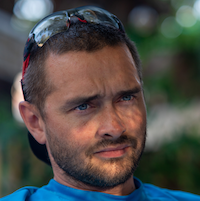
«Yes, and I would go as a sailor a couple more times, but I will definitely go, because what I saw, even with the prospect of reduced libations, completely ruined all other possible types of sea recreation.»

«It was my first time on a yacht, and I was worried it would be boring or I'd get seasick, but my concerns were completely unfounded. The sea, sun, fresh air, good company, absence of unnecessary people, sounds and events allowed me to reboot and rethink a lot. The sense of freedom that a yacht gives you is incomparable to anything else.»
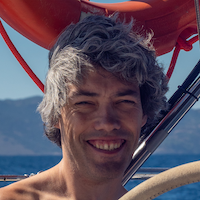
«Spent a week working from a yacht with a wonderful company, sailing along the coast of Turkey. It felt like I didn’t even take a vacation, yet my mind got completely recharged. So I highly recommend it.»
Frequently Asked Questions About Yacht Workations
Everything you need to know about Wild Workation yacht workations: how internet works on board, what a berth costs, whether you need sailing experience, and where we sail. Honest answers with specific facts.
Wild Workation is a company that organises yacht workations aboard catamarans in the Mediterranean and Andaman Sea. We run 7-day voyages for remote professionals across three destinations: Turkey (Göcek–Fethiye Bay, Turquoise Coast), Greece (Cyclades, Lavrio to Santorini), and Thailand (Andaman Sea, Phuket to Ko Haa). Every voyage is led by a professional skipper and equipped with a 5G router with a local SIM card.
A yacht workation is a remote work format where you live and work aboard a sailing catamaran while moving between islands and anchorages. Mornings are focused work with 4G internet; afternoons are a sail to the next stop; evenings are for swimming, shore, and dinner. The work block and free time are cleanly separated — which makes the format more productive than most home office setups.
Wild Workation cruises are for remote professionals who can independently manage their own work schedule: software developers, designers, marketers, analysts, freelancers, entrepreneurs. The key requirement is the ability to work autonomously during morning hours (approximately 9:00–13:00). No sailing experience is needed.
A regular charter is a leisure trip; Wild Workation is a voyage built around remote work. Key differences: the daily schedule protects morning work hours, every yacht carries a high-speed 5G marine router, the group consists exclusively of remote professionals, and passages between anchorages are planned after the work block ends — not during it.
According to feedback from our participants — yes. A morning at anchor is structured: no dress code, no office interruptions, no pointless meetings. 4–6 hours of focused work with the sea waiting afterwards creates a natural deadline that sharpens focus. Most participants report completing as much as a full office day, but with considerably less effort.
Wild Workation runs voyages across three destinations: (1) Turkey — workation cruise through the Göcek–Fethiye National Marine Park, Turquoise Coast; (2) Greece — Cyclades workation (Lavrio to Santorini via Serifos, Sifnos, Milos, Folegandros); (3) Thailand — Andaman Sea sailing vacation (Phuket to Phi Phi, Ko Lanta, Ko Haa).
6–8 guests per catamaran. This is the optimal size: large enough for interesting company, small enough that everyone has their own workspace and personal space. Full charters are available for teams and private groups.
Yes. Every Wild Workation yacht carries a 5G router with a local SIM: Turkcell/Vodafone in Turkey, Cosmote/Vodafone Greece in Greece. Real-world speeds at anchor: 20–50 Mbps. Sufficient for video calls, code deploys, cloud tools, and file transfers. Coverage is stable 90% of the time; routes are planned with reliable signal zones in mind.
Yes — video calls work stably when the yacht is at anchor, which is most of the day. Brief drops can occur during passages or in very remote anchorages. We recommend scheduling critical meetings for morning hours: at anchor, in the quiet cockpit or saloon, with a consistent signal.
Every Wild Workation catamaran has three work zones: (1) cockpit — open stern deck with a sun shade, large table, and 220V outlets; (2) panoramic saloon — enclosed, air-conditioned, with a table for 6–8; (3) foredeck — for those who prefer working in the sun by the water. Internet and power available at every spot.
Most participants work 5–6 focused hours per day, typically 9:00–14:00. This is comparable to a productive meeting-free office day. Passages are planned for the afternoon, so the morning work block stays untouched.
No sailing experience is needed. The yacht is operated by a licensed professional skipper. Participants need no skills. If you want to learn the basics of sailing — the skipper will happily teach you during the voyage itself.
Double cabins: a double bed or two singles, air conditioning, 220V and USB outlets, a small wardrobe, and a porthole. Hot-water shower bathroom shared between 2–3 cabins depending on the yacht. Fresh bedding and towels provided for every guest. Cabin size is comparable to a compact hotel room.
A berth on a 7-day workation cruise costs from €1,100 (early bird, Turkey) to €1,500 (standard price, Greece). A full private cabin for two: €2,200–2,400. Included: 7 nights on the catamaran, skipper, fuel, port fees, bedding, and onboard internet. Extra: groceries (bought together), flights, marina transfer, and meals ashore.
Every Wild Workation berth includes: 7 nights on the catamaran, skipper services, fuel, anchorage and port fees, bedding and towels, 5G router with local SIM, basic snorkelling gear, and yacht cleaning.
Not included: flights to the departure port, airport–marina transfer, meals ashore (lunches/dinners at restaurants, €10–25 per person), alcohol, personal expenses, shore excursions, scuba diving, and skipper gratuity (optional, typically 5–10%).
Yes. Full yacht charter (up to 8 berths) is available for teams, families, or corporate retreats. The route, schedule, and programme are tailored to your needs. A charter for 6+ people is more cost-effective than booking individual berths. Contact us for a quote.
The 50% booking deposit is non-refundable but can be transferred to another voyage if cancelled 30+ days before departure. The remaining balance is due 14 days before the voyage. If Wild Workation cancels due to weather or force majeure — full refund or rebooking.
Choose a cruise on the website, select your cabin type, and fill in the booking form. We confirm availability and send payment details within 24 hours. A 50% deposit holds your spot on the voyage.
We recommend booking 4–8 weeks ahead of your preferred dates. Peak-season sailings (July–August) often fill up 2–3 months in advance. Popular destinations (Santorini, Phi Phi) tend to sell out earliest.
Essentials: laptop, noise-cancelling headphones, chargers and a power strip, light clothing, swimwear, flip-flops and shoes for shore, SPF 50+ sunscreen, a light jacket for evenings. Snorkelling gear is provided on board. Replace hard suitcases with soft duffel bags — they fit the cabin storage much better.
Yes — we require travel insurance with water sports and activities coverage for all participants. A policy costs €20–50 per week and typically covers medical treatment, evacuation, and trip cancellation.
The Mediterranean and Phang Nga Bay are among the calmest sailing waters in their respective regions. At anchor there is virtually no motion. If you are prone to seasickness, bring Dramamine (dimenhydrinate) or Sea-Band acupressure wristbands. The body adapts within 1–2 days.
It depends on the destination. Turkey and Greece (Mediterranean): May–October; the best months for a workation are May–June and September–October (fewer tourists, milder weather). Thailand (Andaman Sea): November–April (dry season only). The most comfortable periods for productive work are the shoulder months — before and after peak tourist season.
Predominantly remote professionals aged 25–45: developers, designers, marketers, product managers, freelancers, startup founders. 40–50% of participants join solo. Shared interests — remote work, the sea, unconventional travel — bring the group together quickly. Many participants stay in touch well after the voyage.
Yes. No socialising is forced. You can work in your private cabin with headphones, swim alone, and read on the foredeck. Evening dinners and activities are an opportunity, not an obligation. The format is equally comfortable for those who want company and those who value personal space.
A workation (from "work" + "vacation") is a format where you keep doing your normal remote job, but from a place people usually save for time off. It is not a holiday and not a retreat: the working day stays intact — focused hours in the morning — and the travel happens around it, in the afternoons and evenings. The point is not a break from work, but a change of environment that makes the work better.
From a holiday: on a workation you actually work — the trip is built so the working hours are protected, not squeezed in between activities. From ordinary remote work: the environment changes on purpose. Instead of the same flat or café every day, you get a new setting (for us, a different bay each day) that breaks the routine and, for most people, sharpens focus rather than scattering it.
No — a workation is a general format, not a specific place. People do workations from mountain cabins, coliving houses, villas, and boats. A sailing workation is simply the version we run: a small group on a catamaran, a new anchorage each day, the working morning protected. The principle is the same everywhere — keep the job, change the environment.
Ready to try one?
See the next departures — prices, dates, and exactly what is included for each trip.